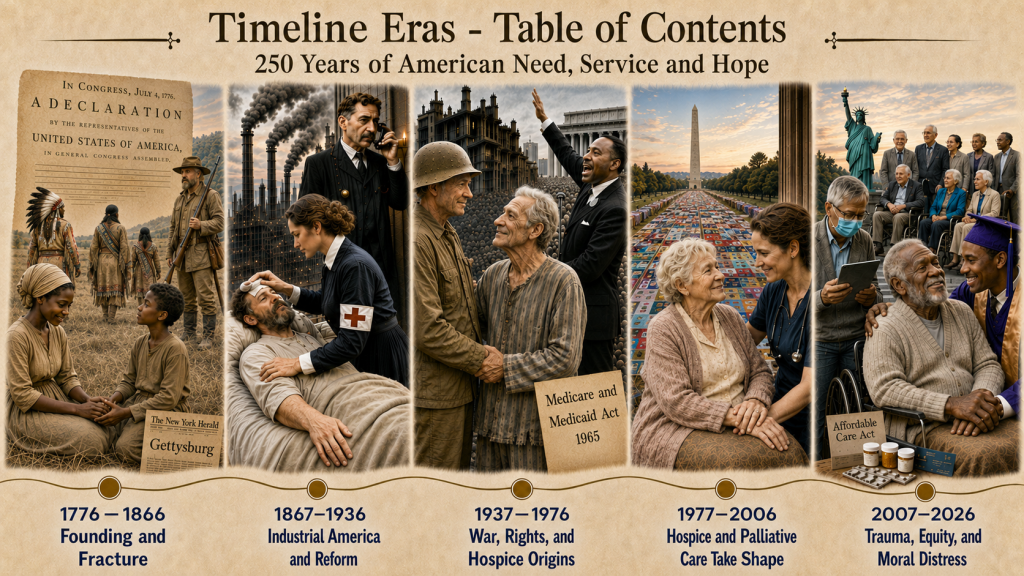
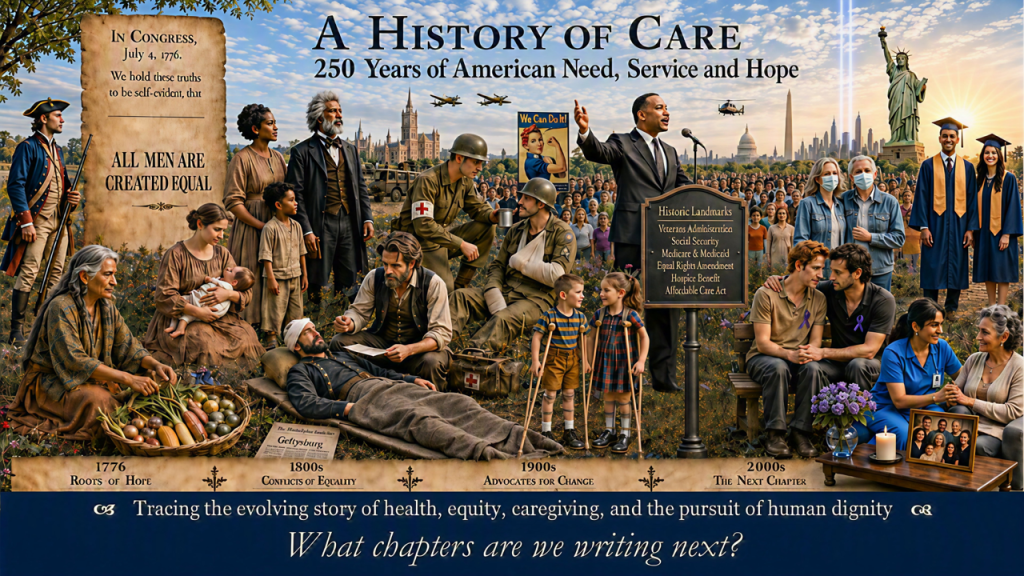
1867-1936: Industrial America and Reform
Interwoven themes: Reconstruction and racial violence. Industrialization and urban poverty. Emerging public health and vital statistics. Professionalizing medicine and nursing. Migration, westward expansion, and displacement. Charity, settlement work, and early safety nets.
Click on images below to go to decade-specific content
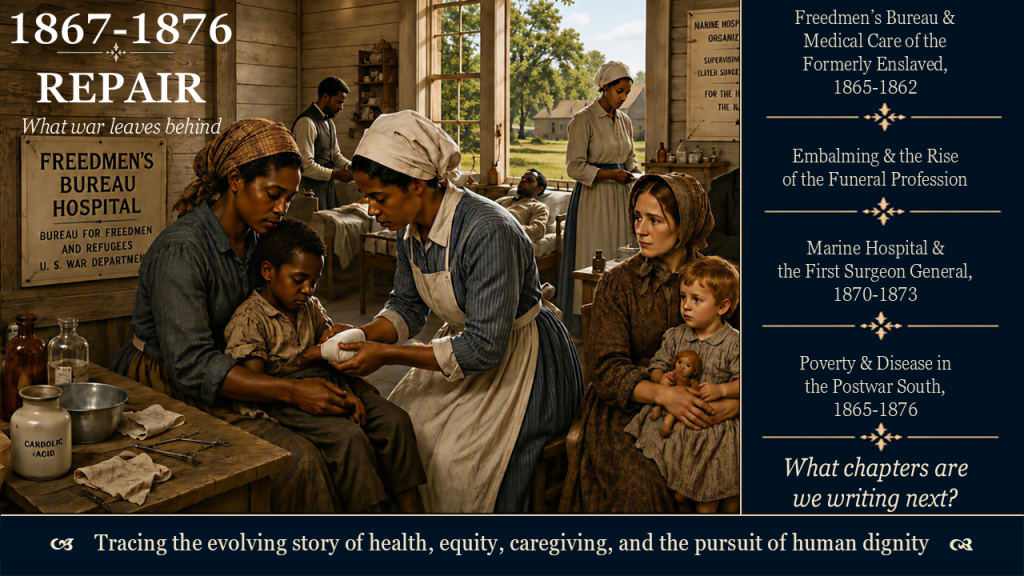

1867-1876
posted in Hospice & Palliative Care Today, June 19, 2026
1. U.S. Congress, Freedmen’s Bureau and the Medical Care of the Formerly Enslaved, 1865–1872
- “An Act to establish a Bureau for the Relief of Freedmen and Refugees” provided “food, shelter, clothing, medical services, and land to displaced Southerners, including newly freed African Americans.”
Historical context: Created in 1865 within the War Department, the Freedmen’s Bureau supervised “all matters relating to the refugees and freedmen,” including hospitals, camps, and the distribution of rations and clothing. Through its medical division and facilities such as Freedmen’s Hospital in Washington, D.C., it became an early, if limited, experiment in federally supported health care for people emerging from slavery and war.
Today’s hospice and palliative care: The Bureau’s medical work shows both the promise and limits of federal care for a population whose illness and grief were shaped by generations of racial violence. For hospice and palliative care, it stands as an ancestor of efforts to address racial health inequities, reminding us that serious–illness care for Black communities must confront this history and actively build trustworthy, accessible end–of–life support.
Sources: National Archives – The Freedmen’s Bureau; How History Has Shaped Racial and Ethnic Health Disparities

2. Embalming and the Rise of the Funeral Profession after the Civil War, c. 1860s-1870s
- After the Civil War, embalming, first used widely to preserve soldiers’ bodies for shipment home, helped shift care of the dead from families to a growing profession of undertakers and funeral directors.
Historical Context: During the Civil War, arterial embalming became common as families sought to have soldiers’ bodies shipped long distances home for burial, and embalmers set up camps near battlefields. In the years that followed, embalming and new mortuary technologies fostered the rise of funeral homes and undertakers as a distinct profession, gradually moving washing, laying out, and preparing the dead from parlors and kitchens into commercial funeral parlors and altering how families participated in the care of bodies after death.
Today’s hospice and palliative care: Today, choices abound—before, at, and after the death. At a hospice death, clinicians must sensitively attend to many practical details and intensely emotional dynamics with the family: who is present (or needs to come), who touches the body (or not), and how long families remain physically present with the body. Needs vary by cultural and religious practices and by disposition choices—burial, cremation, organ donation, medical/research donations, green burials. These at-the-death moments often lodge in family memory for the rest of their lives.
Sources: Medical and surgical care during the American Civil War, 1861–1865; Frazer Consultants — A History of Funerals in the United States
3. U.S. Marine Hospital Service, Reorganization and Supervising Surgeon (later Surgeon General), 1870–1873
- In 1870, the Marine Hospital Service was reorganized as a national hospital system with centralized administration under a medical officer, the Supervising Surgeon, later given the title of Surgeon General.
Historical context: Founded in 1798 to care for sick and disabled merchant seamen, the Marine Hospital Service was reorganized in 1870, and in 1871 Dr. John Maynard Woodworth became its first Supervising Surgeon, now recognized as the first U.S. Surgeon General. This shift from scattered local hospitals to a coordinated federal service laid groundwork for a national public health role that would later include infectious disease control, immigrant health, and broader population health responsibilities.
Today’s hospice and palliative care: The emergence of a national “doctor” signaled that the health of vulnerable groups—sailors, immigrants, and the poor—was a matter of public responsibility, not private charity alone. For hospice and palliative care, it underscores that bedside compassion must be supported by policy and coordinated systems if relief and dignity are to reach people far beyond any one institution or family.
Source: History of the Office of the Surgeon General
4. Poverty and Disease in the Postwar South, 1865–1876
- The pinch of want is making itself felt more severely every day and we haven’t the thought that we are suffering for our country that buoyed us up during the war.~ a white Southern woman from a former slaveholding family, writing in the aftermath of Confederate defeat
Historical context: In the ruined South, former slaveholding families and poor white households faced burned farms, lost livelihoods, and the deaths or disabilities of husbands and sons. A Georgia woman’s complaint that “the pinch of want is making itself felt more severely every day” captures how, once the Confederacy was lost, many widows and families faced hunger, debt, outbreaks of smallpox and cholera, and grief without the belief that their suffering served a higher purpose.
Today’s hospice and palliative care: In a divided country, naming the suffering of “the other side” without erasing injustice can itself be a kind of hospice skill: sitting with complicated legacies while tending to the immediate needs of suffering.
Sources: Documenting the American South; Reconstructing the Confederate Widow: An Analysis of the Wives of Fallen Confederate Soldiers and their Response to Reconstruction and the Post War Era

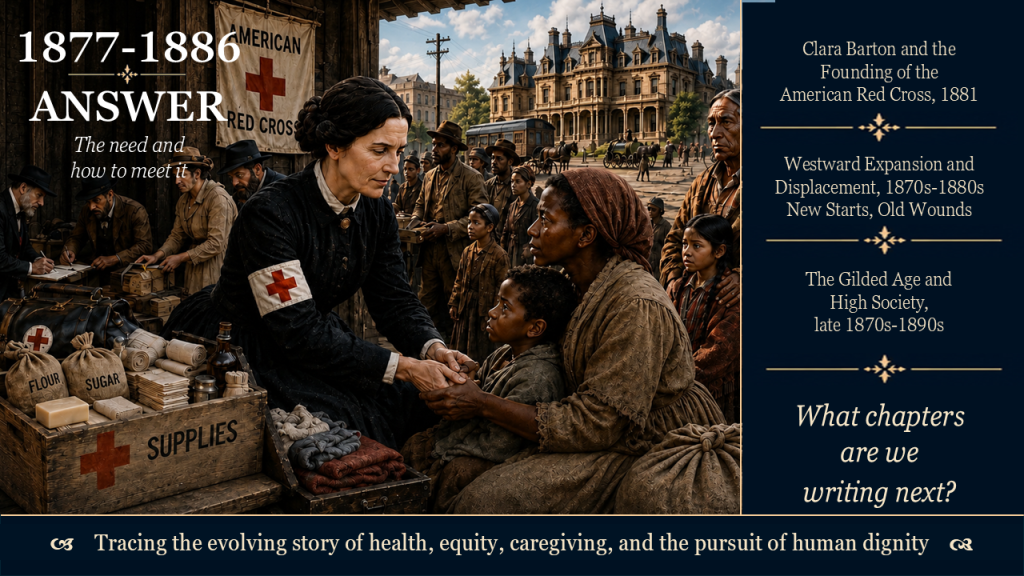
1877-1876
posted in Hospice & Palliative Care Today, June 20, 2026
1. Clara Barton and the Founding of the American Red Cross, 1881
- “You must never think of anything except the need, and how to meet it.”
Historical context: After the Civil War, Clara Barton learned about the International Red Cross in Europe and became convinced the United States needed similar organized relief. In 1881 she founded the American Red Cross and, through the 1880s, led volunteer responses to fires, floods, and epidemics, shifting aid from improvised charity to a neutral, coordinated movement centered on people in acute distress.
Today’s hospice and palliative care: Barton’s focus on “the need, and how to meet it” echoes the daily discernment of hospice and palliative teams at the bedside. Her legacy invites us to see symptom control, family support, and advocacy for neglected patients as forms of organized compassion—practical, disciplined, and directed toward those whose suffering is greatest, regardless of status or setting.
Sources: Clara Barton Birthplace Museum; American Red Cross – 145 Years of Humanity
2. Westward Expansion and Displacement, 1870s–1880s — New Starts, Old Wounds
- It is estimated that in the 1870s, approximately 40,000 to 60,000 African Americans left the South and migrated westward.
Historical context: In the late 1870s and early 1880s, tens of thousands of Black Southerners—Exodusters—fled lynching, debt peonage, and Jim Crow violence, heading to Kansas and other Western states in a “Great Exodus.” Many arrived destitute, prompting the Kansas Freedmen’s Relief Association and local Black churches to provide food, clothing, and help in finding homes and work. At the same time, westward expansion deepened the long dispossession of Native nations as treaties were broken, wars waged, and communities pushed onto reservations, with hunger, disease, and population loss following the seizure of Indigenous lands.
Today’s hospice and palliative care: This era shows how one group’s “fresh start” can rest on another’s prolonged suffering, and how migrants may reach new places already worn down by trauma, illness, and loss. For hospice and palliative care, it is a reminder that many patients—especially those displaced by racism, poverty, or violence—carry histories of movement and broken promises, and that compassionate care includes attention to safety, shelter, and belonging alongside the management of serious illness.
Sources: Exoduster – Homestead National Historical Park; Westward Expansion and Displacement
3. The Gilded Age & High Society (late 1870s–1890s)
- “The construction of these new hospitals and hospital wings and extravagant new medical office buildings serve to ‘represent power, conquest, legacy building, and achievement, and yet are not always in line with what is best for the populace.’” – Tom Dahlborg, 2011, reflecting on medicine’s “gilded age”
- “We are in a ‘Gilded Age of medicine’ in which patients are often treated less as humans in need of care than consumers who generate profit.” – Dhruv Khullar, MD, 2024
Historical context: Mark Twain and Charles Dudley Warner coined the term “Gilded Age” in their 1873 novel of the same name to describe a society whose glittering surface concealed deep corruption and widening gaps between rich and poor. During the Gilded Age, wealthy elites endowed grand hospitals and medical institutions that signaled power, prestige, and civic legacy, while poor, immigrant, and racially marginalized communities were relegated to charity wards, almshouses, or went without adequate care. This paradox—impressive “gilded” buildings for the few and thin, unequal care for the many—helped normalize a stratified system in which class, race, and wealth strongly shaped who benefited from emerging scientific medicine.
Today’s hospice and palliative care: Just as Gilded–Age hospitals became symbols of wealth and status that did not necessarily serve “what is best for the populace,” some for–profit hospices today mirror that pattern—entities whose financial and M&A narratives can overshadow their commitments to bedside time, continuity, and quality at the end of life. At the same time, nonprofit and many for–profit hospices alike are working intentionally against this drift, grounding their decisions in patient, family, and community needs rather than in valuations alone.
Sources: Dahlborg T. “The gilded age of healthcare”; Khuller, D. “The gilded age of medicine is here”; History of Public Health: National developments in the 18th and 19th centuries; Gilded Age – Britannica
1887-1896
posted in Hospice & Palliative Care Today, June 21, 2026
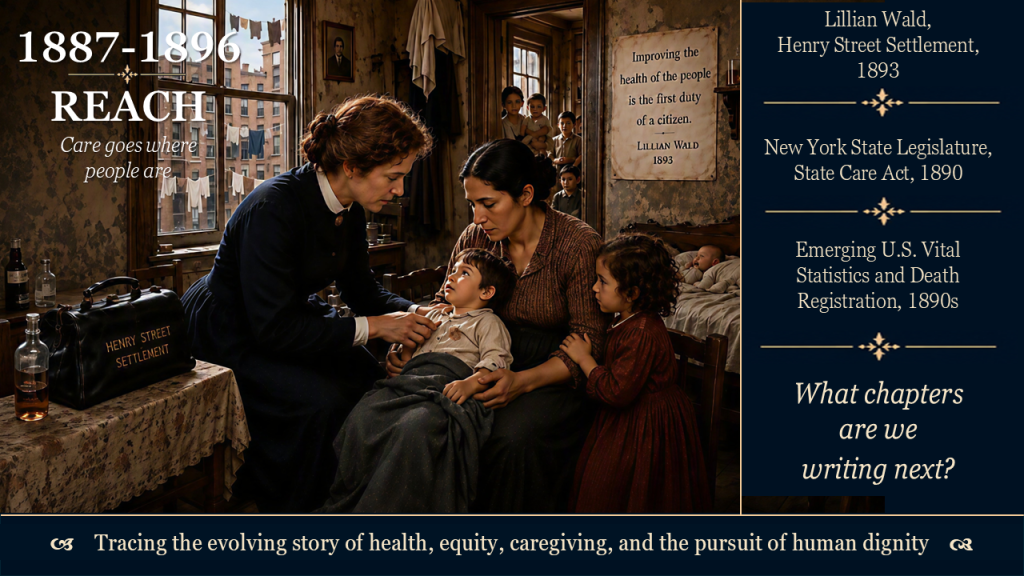
1. Lillian Wald, Henry Street Settlement, 1893
- Lillian Wald, widely credited with coining the term public health nurse in 1893, linked bedside care in poor neighborhoods with organized public health, social reform, and nursing leadership.
Historical Context: In 1893, after encountering severe poverty and illness on New York’s Lower East Side, Lillian Wald began the home nursing work that grew into Henry Street Settlement and the Visiting Nurse Service. Widely credited with coining the term “public health nurse,” Wald helped define a new model of care in which nurses worked not only at the bedside but also within the life of a neighborhood, attending to housing, sanitation, labor conditions, and family well-being. She pioneered school nursing and broader public health nursing as organized, community-based work rather than charity alone.
Today’s hospice and palliative care: Nursing wherever people call” home” has become one of the clearest expressions of person-centered care—meeting people in houses and apartments, in senior living and long-term care, and in shelters and other fragile places of refuge. Home health and hospice nurses—with interdisciplinary colleagues—now meet needs where people live life, while supporting family caregivers. Our work ahead is to extend that promise—closing equity gaps in under-resourced and rural communities; ensuring excellent care that more fully lives out our founding claim that all are created equal and endowed with certain unalienable rights.
Sources: Lillian Wald (1867-1940); The Atlantic / NYPL Wald Papers
2. New York State Legislature, State Care Act, 1890
- In 1890, New York State prohibited the confinement of indigent people with mental illness in jails and poorhouses and required that they be cared for in state institutions at state expense.
Historical context: The State Care Act shifted indigent New Yorkers with mental illness out of county poorhouses and jails and into a state hospital system. While this was an improvement, it also reveals time-sensitive gaps in dignity. The Act’s 1896 “completion” document described persons as “lunatics,” “indigent insane, and “wretched loves,” language that exposes how stigma was embedded in the system. While these new settings promised more consistent and medically supervised care, stigmas lived on in the asylum model itself, where separation, prejudice, chronic illness, and long confinement shaped how they lived—and died.
Today’s hospice and palliative care: People living with serious mental illness still too often miss the access and dignity that end-of-life care should offer everyone. Hospice and palliative care can answer that gap best when mental health, medical, and caregiving teams work together so that no one remains unseen at the end of life. Side note: in Spanish, the word “hospice” translates to “asilo or asylum,” which can carry negative connotations. Many international hospices use the word “palliative care.”
Sources: NY State Archives, Hospital Commission; NY State Care System for the Insane Completed: 1896
3. Emerging U.S. Vital Statistics and Death Registration, 1890s
- By the 1890s, the United States was building a more systematic way of recording deaths, as states adopted laws requiring registration of deaths with details such as cause, age, and place of residence.
Historical context: In the 1890s, death registration in the United States was still strong in some cities and states, weak or absent in others. Still, the idea was taking hold that every cause of death should be counted. Early mortality tables showed, for example, that tuberculosis and infant deaths were concentrated in crowded, poor urban districts. The records were incomplete and often biased, especially in rural areas and among marginalized communities, yet they marked a turning point: mortality became not only a family event, but also a public fact that could reveal patterns of suffering and push for reform.
Today’s hospice and palliative care: Today’s hospice and palliative care live in the world those early tables made possible, drawing on data from CMS, NHPCO/The Alliance’s annual Facts and Figures, Hospice Analytics, state scorecards, and evidence-based studies to see who is—and is not—reached by serious-illness care. Location-of-death reports, race and ethnicity utilization tables, and tools such as CMS’s Mapping Medicare Disparities now highlight patterns of inequity that used to remain invisible. And, while today’s exploding uses of Artificial Intelligence promise new ways to forecast risk, guide palliative referrals, and support decision making—but such AI demands careful ethical scrutiny so that algorithms deepen, rather than distort, the commitment to dignity, access, and human judgment for care the end of life.
Sources: US Census Office, Vital and Social Statistics of Death, 1890, Mortality Differentials within Large Cities in 1890; CMS.gov – Hospice; NHPCO/The Alliance Facts and Figures; Hospice Analytics; CMS Mapping Medicare Discrepancies
1897-1906
posted in Hospice & Palliative Care Today, June 22, 2026
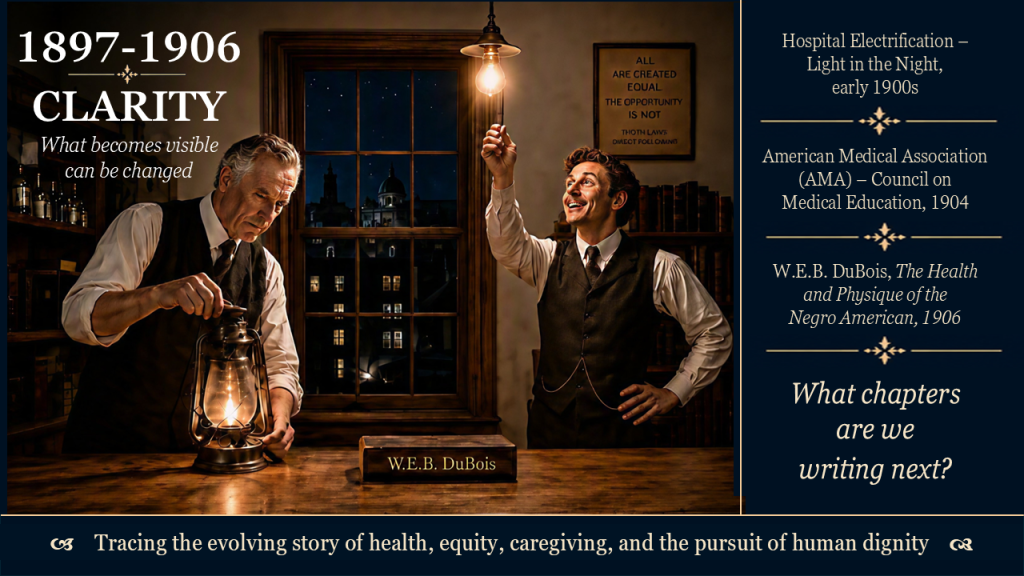
1. Hospital Electrification — Light in the Night, early 1900s
- By 1900, Edison’s 1879 incandescent bulb was replacing kerosene lamps and gas fixtures.
Historical context: Electric lighting was part of the broader industrial age: new power plants, wiring, and bulbs made it possible to illuminate wards, operating rooms, and corridors through the night. This shift improved visibility, safety, and infection control, and allowed clinicians to respond more quickly to emergencies. Still, access remained unequal, with rural and segregated communities often left behind.
Today’s hospice and palliative care: Yesterday’s new light bulbs are now today’s middle–of–the–night smartphones and emergency telehealth visits, with artificial intelligence casting powerful searchlights on how we anticipate and relieve suffering. Yet gaps in broadband, bias in algorithms, and uneven access to clinicians mean these tools can deepen inequity as easily as close it—unless we use them intentionally to bring timely, person–centered care to communities that have waited longest.
Sources: The History of Surgical Lights; Lighting America – The Early Adoption of Electric Light
2. American Medical Association (AMA) — Council on Medical Education, 1904
- In 1904 the AMA formed its Council on Medical Education to investigate and set standards for medical schools in the United States.
Historical context: At the turn of the twentieth century, U.S. medical education was uneven and often commercial, with proprietary schools, low admission standards, and little accountability for outcomes. The AMA’s new Council on Medical Education began rating and reforming medical schools, pushing toward scientific rigor, standardized curricula, and eventually the Flexner Report’s sweeping changes—a shift from medicine as a trade to medicine as a profession with shared standards.
Today’s hospice and palliative care: Today, the AMA’s medical education policies and its work on Undergraduate Medical Education competencies and standards press for consistent, outcomes–focused training for every physician, echoing the Council’s original call for rigor and public accountability. Building on that foundation, the American Academy of Hospice and Palliative Medicine(AAHPM) and the Accreditation Council for Graduate Medical Education (ACGME)–accredited hospice and palliative medicine fellowships advance subspecialty training, board certification, and quality initiatives so more clinicians are prepared to deliver high–quality serious–illness care wherever patients are. View AAHPHM’s “Pledge to Diversity, Equity & Inclusion.”
Sources: The Flexner Report: A Revolution in American Medical Education; AMA’s Recommendations for Future Directions for Medical Education H-2295.995, 2024; AAHPM’s Hospice and Palliative Medicine Fellowships; AAHPHM’s Pledge to Diversity, Equity & Inclusion
3. W.E.B. DuBois, The Health and Physique of the Negro American, 1906
- “The Negro death rate and sickness are largely matters of condition and not due to racial traits and tendencies.” ~ W.E.B. DuBois
Historical Context: In the grip of Jim Crow, Du Bois rejected the false biology of racial inferiority and showed that Black health disparities arose from living conditions, labor exploitation, housing, and discrimination. He replaced stigma with evidence and insisted that unjust conditions—and the suffering they cause—can be changed.
Today’s hospice and palliative care: Today, CMS Hospice Conditions of Participation anchor care in “exercise of rights and respect for property and person” (Patient Rights § 418.52(b), making dignity a core requirement, not an aspiration. CAHPS Hospice then asks the primary caregiver, “How often did the hospice team treat your family member with dignity and respect?” and “While your family member was in hospice care, how much support for your religious, spiritual, or cultural beliefs did you get from the hospice team?” Together, these commitments show real progress toward the humane, condition-aware care DuBois envisioned, even as equity and trust remain active work, not a finished chapter.
Sources: The health and physique of the Negro American, W.E.B. DuBois, 1906; CMS Hospice Conditions of Participation; CMS CAHPS Hospice Survey
1907-1916
posted in Hospice & Palliative Care Today, June 23, 2026
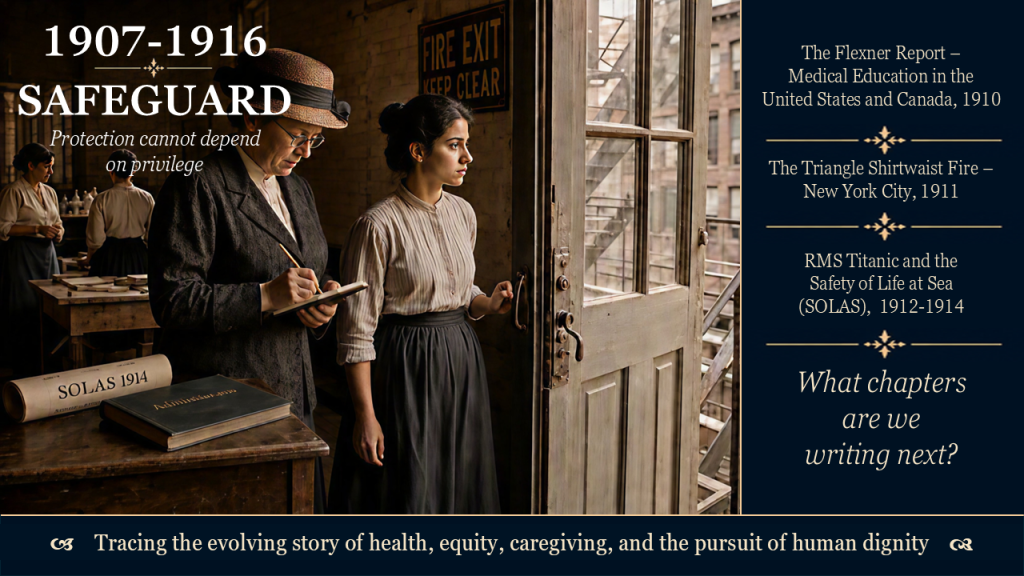
1. The Flexner Report, Medical Education in the United States and Canada – A Report to The Carnegie Foundation for the Advancement of Teaching, 1910
- “A well-taught negro sanitarian will be immensely useful; an essentially untrained negro wearing an M.D. degree is dangerous.” ~ Dr. Abraham Flexner, The Flexner Report’s author, 1910
Historical context: Abraham Flexner’s 1910 report modernized American medical education—and gutted it for Black and women physicians. Within 15 years, 5 of 7 Black medical schools had closed; women’s enrollment fell by half. Flexner’s use of lowercase “negro”—at a time when Black writers and advocates were actively demanding capitalization as a matter of dignity—was not accidental. His explicit intent was to train Black physicians as servants of white public health, not as clinicians. Researchers estimate that had those schools survived, 30,000–35,000 more Black physicians would have entered the workforce by 2019.
Today’s hospice and palliative care: Flexner’s legacy still shapes today’s workforce. For many Black patients and families, mistrust is not a personality trait; it is the lived memory of generations blocked from the “pursuit of happiness” through medical education and service. The deeper work is rebuilding trust through action: supporting culturally and gender–concordant teams where possible, partnering with communities, and using research, quality data, and carefully designed AI tools to surface and address longstanding gaps in pain control, access, and hospice referrals—so the care we provide more faithfully reflects the communities we serve.
Sources: The Flexner Report, Medical Education in the United States and Canada – A Report to The Carnegie Foundation for the Advancement of Teaching; How one 1910 report curtailed Black medical education for over a century; AAMC renames prestigious Abraham Flexner award in light of racist and sexist writings
2. The Triangle Shirtwaist Fire, New York City, Garment District, 1911
- “The life of men and women is so cheap and property is so sacred. There are so many of us for one job it matters little if 146 of us are burned to death.” ~ Rose Schneiderman, labor organizer, New York City, April 2, 1911
Historical context: On March 25, 1911, fire consumed the Triangle Shirtwaist Factory’s upper floors. Doors were locked, ladders fell short, and 146 workers—most of them young immigrant women—died. The owners were acquitted. But from the ash came 30+ New York workplace safety laws, the U.S. Department of Labor (1913), workers’ compensation reform, Frances Perkins’s Fair Labor Standards Act (1938), and—six decades later—OSHA (1970). This 1911 fire rewrote the legal obligation of employers to the people in their care.
Today’s hospice and palliative care: Every hospice agency now operates under OSHA standards, fire safety codes, and a federally required Emergency Preparedness Program—a direct legacy of this tragedy. The cycle of mitigation, preparedness, response, and recovery now covers hospice office sites, GIP units, and patients wherever they call “home,” along with the teams and volunteers who care for them on the road. When California wildfires displaced patients or Hurricane Helene cut off rural hospice teams, these plans meant the difference between abandonment and continuity of care. Disasters still expose gaps in communication and patient care. The 1911 Triangle fire reminds us that the cost of poor safety is measured in lives.
Sources: How a Factory Fire in 1911 Changed Workplace Safety Forever; Schneiderman’s April 1911 Speech
3. RMS Titanic (1912) and the Safety of Life at Sea (SOLAS – 1914)
- “The first Convention for the Safety of Life at Sea was prompted by the sinking of RMS Titanic.” ~ The National Archives (UK)
Historical context: On April 15, 1912, the “unsinkable” Titanic sank in the North Atlantic after striking an iceberg. More than 1,500 people died — about two-thirds of all on board. Survival was sharply stratified: passengers in first-class cabins near the deck lived at far higher rates than immigrant families confined to third-class steerage. Outrage over inadequate lifeboats, poor drills, and missed wireless warnings led directly to the first International Convention for the Safety of Life at Sea (SOLAS) in 1914, which set binding global standards for lifeboats, lifejackets, drills, and continuous radio watch.
Today’s hospice and palliative care: Titanic and SOLAS reshaped what we expect from safety planning: enough “lifeboats,” clear procedures, and someone always listening for distress (24/7 on–call). In serious–illness care, which translates into patient–specific emergency plans and equitable access to safety: backup power for home oxygen, routes for safe transfer and evacuation, and disaster planning that includes people who are homebound and far from the nearest hospice team. Hospice and palliative care inherit Titanic’s question in a new form: are we planning so that every patient, in every setting, has a real chance to be reached, communicated with, and kept safe where they are—or safely moved when they cannot stay?
Source: The National Archives – The Convention for the Safety of Life at Sea (SOLAS)
1917-1926
posted in Hospice & Palliative Care Today, June 24, 2026
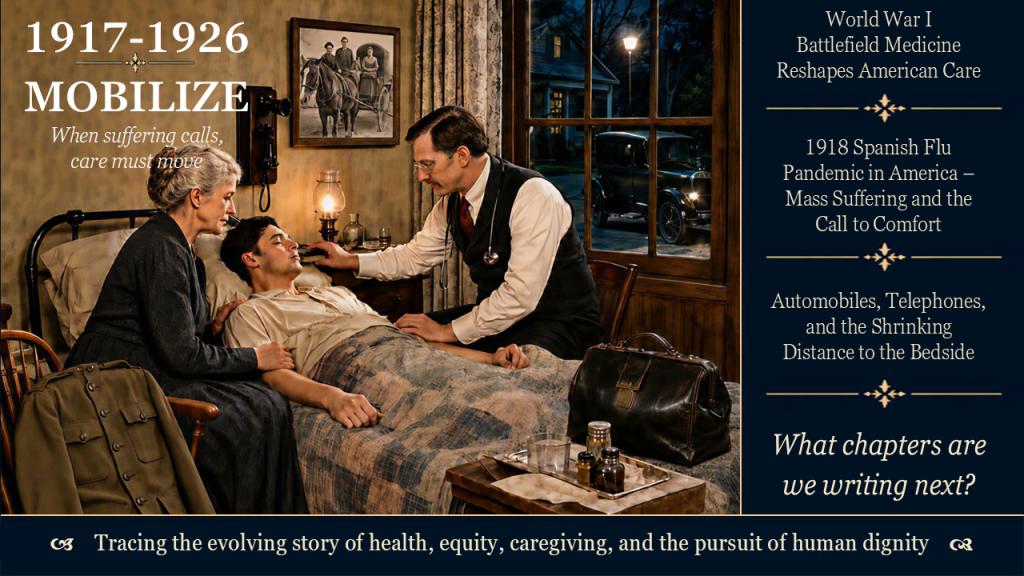
1. World War I – Battlefield medicine reshapes American care
“War is the most powerful instrument of medical progress.” ~ Dr. William Osler, John Hopkins University’s first professor of medicine; his son died in action during World I, with a grief-stricken William dying in 1919
Historical context: World War I forced American clinicians to manage unprecedented volumes of traumatic injury and infection in young soldiers, driving advances in surgery, antisepsis, X–ray use, and the organization of hospitals and rehabilitation services. Triage systems became more explicit—deciding who received immediate surgery, who could wait, and who would receive only comfort—while the long–term needs of wounded and disabled veterans spurred expanded hospital capacity, prosthetics, and structured rehabilitation in the United States.
Today’s hospice and palliative care: Modern hospice and palliative care build directly on these currents: better pain control, systematic triage, stronger nursing, and recognition that serious, life–limiting illness demands organized, ongoing support rather than episodic rescue. We inherit the wartime lesson that those expected to die still require expert symptom management and presence. Today, we extend these insights into comprehensive palliative services for veterans and civilians alike, addressing physical pain, psychological distress, and moral injury across the lifespan.
Sources: William Osler, 1849-1919; How World War I Influenced the Evolution of Modern Medicine; Advancements in Medical Care during World War I
2. 1918 Spanish flu pandemic in America – Mass suffering and the call to comfort
- “The influenza epidemic that swept the world in 1918 killed an estimated 50 million people. Within months, it had killed more people than any other illness in recorded history.” ~ U.S. National Archives
Historical context: The 1918–1920 “Spanish influenza” pandemic devastated families and communities, attacking roughly one–fifth of the world’s population and killing about 50 million people worldwide, including an estimated 675,000 in the United States. Young adults who were previously healthy could go from first symptoms to suffocating death in a few days. In some cities, hundreds died in a single day. Life expectancy in the U.S. dropped by 12 years, and grief piled up faster than funerals could be held.
Today’s hospice and palliative care: The twin pandemics of 1918’s Spanish influenza and 2020’s COVID–19 revealed how quickly deadly disease can spread, how easily people can die in isolation, and how severely economics and everyday life can be disrupted. Ongoing, COVID–era solutions have become new norms—telehealth, stricter infection control, masking when needed, vaccination campaigns, and even video–streamed funerals—each reshaping how we accompany seriously ill and dying people across distance and danger.
Sources: National Archives – The Deadly Virus, The Influenza Epidemic of 1918; COVID-19: a comparison to the 1918 influenza and how we can defeat it
3. Automobiles, telephones, and the shrinking distance to the bedside
- By the 1920s, the automobile and telephone were changing how Americans lived, worked, and stayed connected.
Historical context: In the years after World War I, mass–produced cars, better roads, and expanding rail networks allowed doctors and patients—especially those who were urban and better–off—to travel more quickly between home, clinic, and hospital. Telephones spread rapidly through cities and towns, letting families summon physicians and seek advice without sending a messenger, and reinforcing the expectation that medical help could be both mobile and rapidly reachable.
Today’s hospice and palliative care: Emergency response, hospital transfers, and coordinated hospice care now depend on complex infrastructures of mobility and communication, extended through driving to patients, using mobile devices, EMR professional communications, and telehealth. Cars, roads, and phone networks—and their modern descendants—enable hospice and palliative teams to respond quickly to crises, link hospitals with home–based services, and hold time–sensitive family and team conversations across distance, even as they highlight gaps for those still living far from well–resourced centers.
Smithsonian National Museum of American History – Better Roads; Smithsonian – Communication; Telephones Through Time: Smithsonian’s Historic Collection
1927-1936
posted in Hospice & Palliative Care Today, June 25, 2026
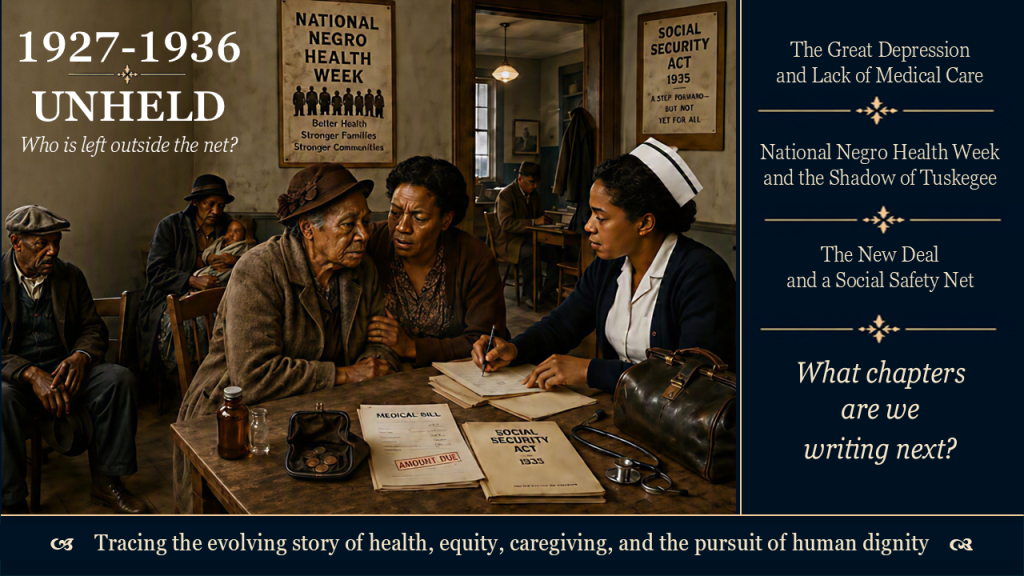
1. The Great Depression and Lack of Medical Care
- “Pain, sickness, and bereavement have shadowed mankind throughout the ages; today there is a vast amount of unnecessary sickness and many thousands of unnecessary deaths.” … “The rising costs of medical care focus public attention on economic issues. Equally important but less publicized are issues of the quality and quantity of such services. … For many people, health services are not available or not accessible, or not affordable, or all of these.” Medical Care for the American People, University of Chicago Press, 1932, pages xv and iii
Historical context: [More from this 1932 report] “… Each year, over a hundred thousand babies die during the first year of life, many of them needlessly. Of the many thousand victims of tuberculosis, over 88,000 died in 1930 alone. Pellagra and hookworm disease reduce the economic efficiency of a large proportion of the people of the South. Syphilis and gonorrhea destroy fertility, deform babies and wreck homes. Over one-third of a million people are mentally diseased. The death rates for cancer, diseases of the heart, and diabetes are rising. Many of the people, young and old, are handicapped by one or more defects—particularly decayed teeth, enlarged or diseased tonsils, defective vision, partial deafness, and weak feet. Medical Care for the American People, 1932, page xv
Today’s hospice and palliative care: Medicare, Medicaid, and insurance reforms now fund hospice and palliative care so that many more seriously ill people can receive pain relief and interdisciplinary care regardless of income or diagnosis. Still, when payment systems prioritize profit over access and quality—disrupting services, straining staff, or inviting fraud, we must keep asking: who is being abandoned in their suffering? What will it take to realign our ethics, operations, and advocacy so that the people we serve remain at the center of financial decisions?
Sources: A forgotten landmark medical study from 1932 by the Committee on the Cost of Medical Care; Medical Care for the American People – The Final Report of The Committee on the Costs of Medical Care, 1932
2. National Negro Health Week and the Shadow of Tuskegee
- “In 1932, the U.S. Public Health Service, working with the Tuskegee Institute, began a study to record the natural history of syphilis.” Tuskegee Study of Untreated Syphilis in the Negro Male
Historical context: By the 1930s, National Negro Health Week at Tuskegee mobilized Black churches, schools, and leaders to confront deadly health disparities under Jim Crow. In that same place and decade, the U.S. Public Health Service began the Tuskegee study, enrolling Black men without true informed consent and later withholding penicillin, causing preventable deaths and deepening mistrust. This study continued until 1972, after media exposure and public outcry led to an advisory panel that called the study “ethically unjustified.”
Today’s hospice and palliative care: The “National Negro Health Week” evolved into “National Public Health Week,” reiterating that “all are created equal.” Today, hospice and palliative care are shaped by government and corporate decisions about who gets covered, where care is offered, and what is paid for. When those decisions widen access, they honor people who were once exploited or excluded. When they restrict access or chase profit, we must ask whose trust is being broken now—and who is again being left to suffer without the care they need?
Sources: Moving From the National Negro Health Week to the National Public Health Week in the United States; The Untreated Syphilis Study at Tuskegee Timeline The Legacy of the Tuskegee study; National Public Health Week
3. The New Deal and a Social Safety Net
- “This law represents a cornerstone in a structure which is being built but is by no means completed… a law that will take care of human needs and at the same time provide for the United States an economic structure of vastly greater soundness.” Franklin D. Roosevelt, statement on the Social Security Act, 1935
Historical context: In 1935, the Social Security Act established federal old–age benefits and, through state partnerships, began supporting some widows, children, and disabled workers. It did not create universal health insurance and often excluded Black, rural, and low–wage workers. Still, it signaled that aging, disability, and poverty in later life were now shared public responsibilities rather than left solely to family or charity.
Today’s hospice and palliative care: Today, Medicare, Medicaid, and related insurance programs—descendants of that “cornerstone” vision—allow many seriously ill people to receive hospice and palliative care they could never privately afford. When laws and payment models widen coverage and sustain safety–net providers, they honor that commitment to human needs. When they narrow benefits or reward profit over access, we must keep asking: whose final years are being made more precarious? What will it take to keep our safety net truly holding across race, class, and geography?
Sources: The Social Security Act of 1935; Anniversary of the Social Security Act of 1935