
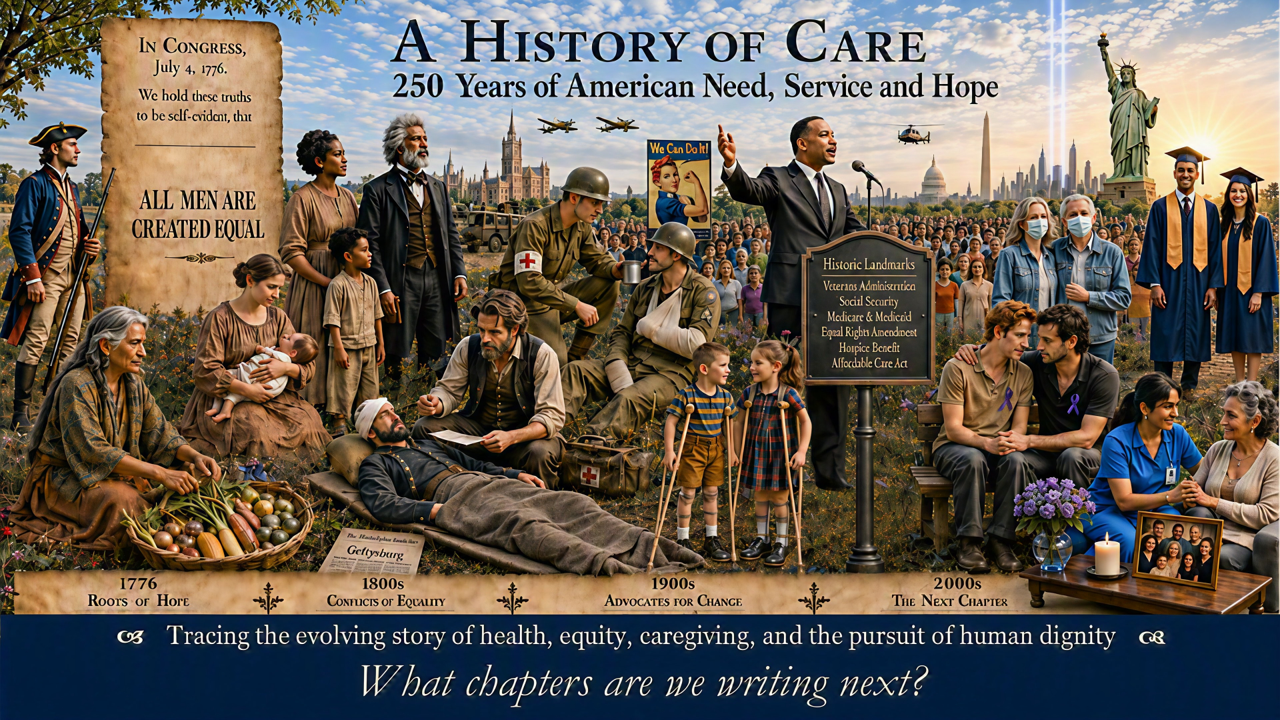
The decades on these pages have moved through founding and fracture, reform and resistance, war and rights, hospice origins and growth, and today’s challenges of access, equity, moral distress, fraud, and more.
They showed failures that demanded truth-telling, but they also revealed courage, reforms, organized compassion, and a growing commitment to relieve pain, protect the vulnerable, and stay present when life grows fragile.
What speaks to you, today?
Where can you make a difference that will matter ahead?
For all who visit this site, these stories are not only history. They are mirrors and windows. They reflect patterns we still recognize in our own organizations and communities. They open views onto people and movements whose work can strengthen our own decisions, integrity, and hope.
This is a history to use–both for and beyond this book’s focus for today’s hospice and palliative care. For executives and boards, this compilation offers perspective for strategy, integrity, workforce support, and community trust. For clinical and interdisciplinary teams, it offers language for reflection, moral clarity, and renewed purpose in the daily work of care.
The work ahead is not to prove ourselves heroic. It is to build forms of care that more fully reflect the dignity and equality that our nation proclaims—to treat each person’s experiences of suffering, grief, and dying as worthy of serious, skillful, steadfast attention. In that sense, our sung prayer remains timely: “America! America! God mend thine every flaw.”
Use this history to ask better questions in the places where decisions are made.
- What suffering is still too easily unseen?
- What patterns of ill-will are we repeating?
- What courageous, compassionate problem-solving are we engaging?
- What will help hospice and palliative care be compassionate, trustworthy, and equal to the times now before us?
This Coda is an invitation to continue the work with clearer sight and steadier courage. The next movement of care will be composed not only by policy or payment, but by how faithfully people and organizations choose to honor human dignity when life grows most fragile.


~ Joy S. Berger, DMA, FT, BCC, MT-BC
Composing Life Out of Loss, Founder/Author/Owner
Hospice & Palliative Care Today, Editor in Chief
Original graphics and selected research supported by AI tools, with design, authoring, and editing by Joy S. Berger