
Composing Life Out of Loss Composing Life Out of Loss
How can we help? Call us at 502.593.3916PORTAL LOGIN
[email protected]
  • Home
  • A History of Care
    • Download Free E-Book
    • Prelude
    • Table of Contents: A History of Care
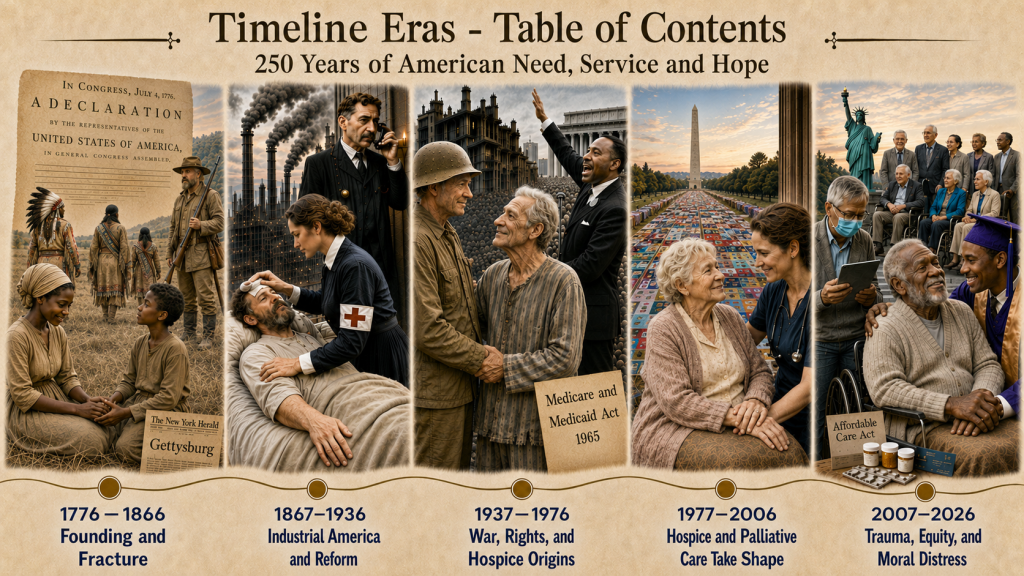
    • 1776-1866: Founding & Fracture
    • 1867-1936: Industrial U.S. & Reform
    • 1937-1976: War, Rights, & Hospice Origins
    • 1977-2006: Hospice & Palliative Care Take Shape
    • 2007-2026: Trauma, Equity, & Moral Distress
    • 2007-2026: Trauma, Equity, and Moral Distress
    • Coda – Composing the Next Movement of Care
    • Key Sources
  • About
    • About
    • Book: Music of the Soul – Composing Life Out of Loss
  • Caregiver/Family Videos
  • Community Crisis
  • Serious Illness
  • Hospice
  • Grief
  • Contact
    • Pay Invoice

PRELUDE

1776–1866: Founding and Fracture

1776-1786

  • Continental Congress, Declaration of Independence, July 4, 1776
  • Dr. Benjamin Rush, Directions for Preserving the Health of Soldiers, 1778

1787-1796

  • Dr. Benjamin Rush, letter to Reverend Richard Allen, September 1793
  • Absalom Jones & Richard Allen, Proceedings of the Black People, Philadelphia, 1794
  • United States Congress, An Act Relative to Quarantine, 1796

1797-1806

  • United States Congress, Act for the Relief of Sick and Disabled Seamen, July 16, 1798
  • Enslaved Healers and Midwives — Care in the Cabins, Early 1800’s
  • Home Deaths at the Turn of the 19th Century (Late 1700’s-Mid 1800’s)
  • Home Parlors and Funerals at the Turn of the 19th Century (Late 1700’s-Mid 1800’s)
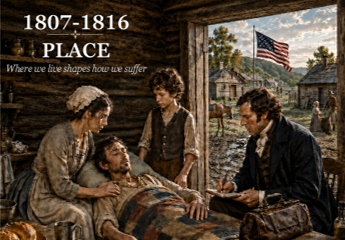
1807-1816

  • Francis Scott Key, ‘The Star-Spangled Banner,’ September 14, 1814
  • Dr. Daniel Drake, Natural and Statistical View, or Picture of Cincinnati, 1815
  • Almshouses as Places to Die — Poor Relief and Separation

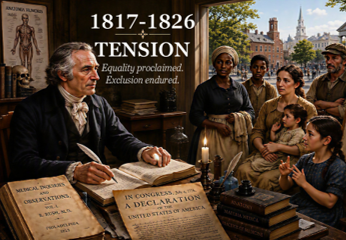
1817-1826

  • New York City Common Council laws regulating funerals of enslaved persons
  • Medical Inquiries and Observations, Volume I (circulating in medical schools during this period)
  • American School for the Deaf, Hartford, Connecticut, April 15, 1817

1827-1836

  • Medical Ethics (circulating in American medical education during this period)
  • U.S. Congress, Indian Removal Act, 1830; Cherokee Nation Memorial, 1829, the Trail of Tears
  • Narrative of Frederick Douglass, an American Slave, 1845; describing c. 1833-1835

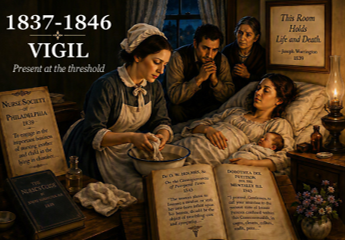
1837-1846

  • Joseph Warrington’s Nurse Society of Philadelphia, 1839, “This Room Holds Life and Death”
  • Oliver Wendell Holmes Sr., “The Contagiousness of Puerperal Fever,” 1843
  • Dorothea Dix, Petition for the Mentally Ill to the Legislature of Massachusetts, January 1843

1847-1856

  • Lemuel Shattuck, Report of the Sanitary Commission of Massachusetts, 1850
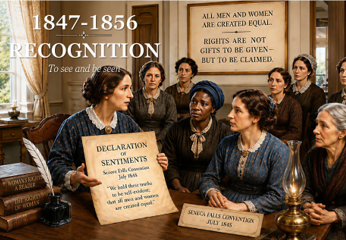
  • Elizabeth Stanton and delegates of the Seneca Falls Convention, Declaration of Sentiments, 1848
  • Sojourner Truth, Ohio Women’s Rights Convention, Akron, 1851 (as recorded by Frances Gage, 1863)
  • Frederick Douglass, “What to the Slave is the Fourth of July?” Rochester, New York, July 5, 1852
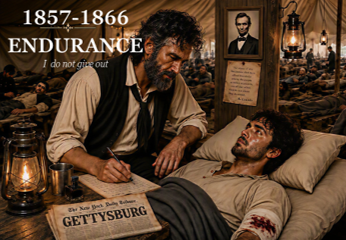
1857-1866

  • Dr. Oliver Wendell Holmes, Sr., Annual Meeting of the Massachusetts Medical Society, 1860
  • Walt Whitman, “The Wound-Dresser,” written from his wartime nursing experience 1862-1865
  • President Abraham Lincoln, Gettysburg Address, November 19, 1863
  • President Abraham Lincoln, Second Inaugural Address, March 4, 1865
  • United States Congress, Act Establishing the National Asylum for Disabled Volunteer Soldiers

1867–1936: Industrial U.S. and Reform

1867-1876

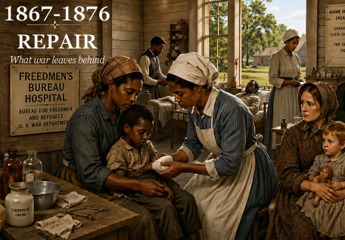
  • U.S. Congress, Freedmen’s Bureau and the Medical Care of the Formerly Enslaved, 1865–1872
  • Embalming and the Rise of the Funeral Profession after the Civil War, c. 1860s-1870s
  • U.S. Marine Hospital Service, Reorganization and Supervising Surgeon, 1870–1873
  • Poverty and Disease in the Postwar South, 1865–1876
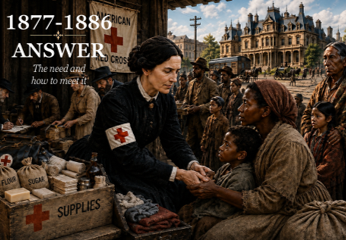
1877-1886

  • Clara Barton and the Founding of the American Red Cross, 1881
  • Westward Expansion and Displacement, 1870s–1880s — New Starts, Old Wounds
  • The Gilded Age & High Society (late 1870s–1890s)

1887-1896

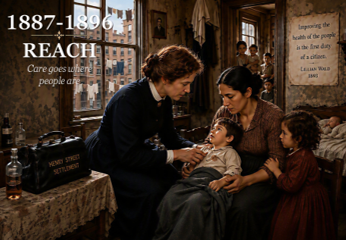
  • Lillian Wald, Henry Street Settlement, 1893
  • New York State Legislature, State Care Act, 1890
  • Emerging U.S. Vital Statistics and Death Registration, 1890s

1897-1906

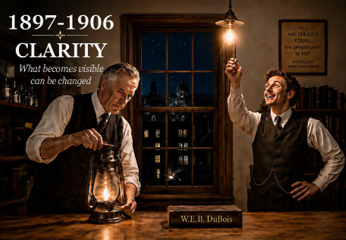
  • Hospital Electrification — Light in the Night, early 1900s
  • American Medical Association (AMA) — Council on Medical Education, 1904
  • W.E.B. DuBois, The Health and Physique of the Negro American, 1906

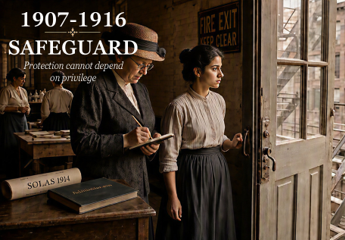
1907-1916

  • Medical Education in the United States and Canada – A Report to The Carnegie Foundation, 1910
  • The Triangle Shirtwaist Fire, New York City, Garment District, 1911
  • RMS Titanic (1912) and the Safety of Life at Sea (SOLAS – 1914)

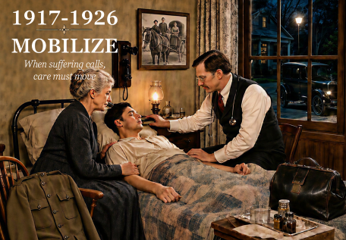
1917-1926

  • World War I – Battlefield medicine reshapes American care
  • 1918 Spanish flu pandemic in America – Mass suffering and the call to comfort
  • Automobiles, telephones, and the shrinking distance to the bedside

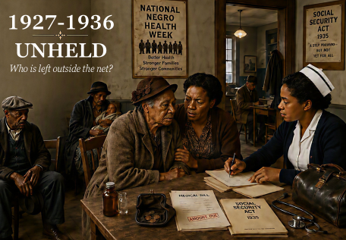
1927-1936

  • The Great Depression and Lack of Medical Care
  • National Negro Health Week and the Shadow of Tuskegee
  • The New Deal and a Social Safety Net

1937–1976: War, Rights, and Hospice Origins

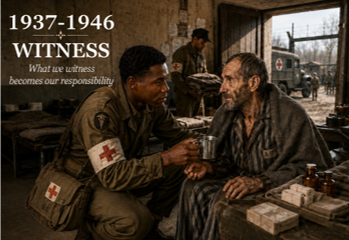
1937-1946

  • 1937–1941: The Gathering Storm
  • 1941-1945: America at War – Saving Lives, Counting Losses
  • 1945: Liberation and the Holocaust – Witnessing the Unthinkable
  • 1945–1946: Aftermath – Wounds Seen and Unseen

1947-1956

  • Hill–Burton Act and “Separate but Equal” Hospitals (1946–early 1950s)
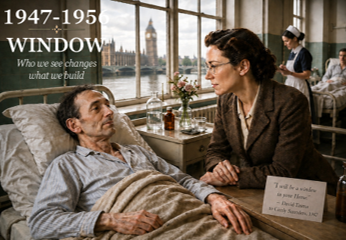
  • Cicely Saunders, David Tasma, and the Window that Opened Modern Hospice (London, 1948)
  • From Home Death to Hospital Death (early mid 1950s)

1957-1966

  • 1950s – Baby Boomers and the Promise of a Longer Life
  • 1963 – President John F. Kennedy’s Death and Televised Grief
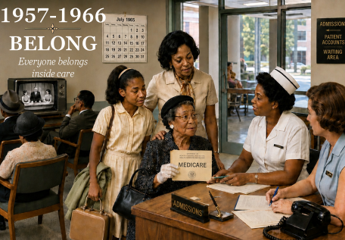
  • 1965 – Medicare, Medicaid, and Who Gets Care
  • Martin Luther King Jr., speech to the Medical Committee for Human Rights, March 25, 1966

1967-1976

  • A world watching death, injustice, and possibility
  • 1967, Dame Cicely Saunders opens St. Christopher’s, the first modern hospice
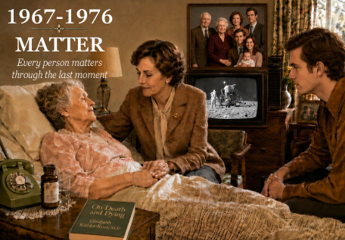
  • 1969, Elisabeth Kübler-Ross authors On Death and Dying
  • Florence Wald, founder of the first U.S. hospice, 1974

1977–2006: Hospice and Palliative Care Take Shape

1977-1986

  • From Margins to Movement (1977–1981)
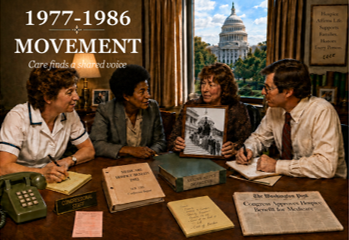
  • The Medicare Hospice Benefit (1982–1984)
  • Building Disciplines and Identities (1976–1986)

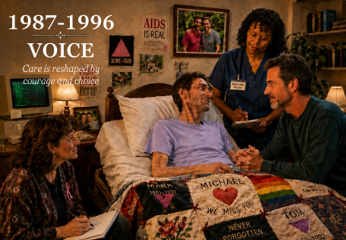
1987-1996

  • AIDS, Activism, and the Edges of Care
  • High-Tech Medicine and the Start of a Digital Era
  • Pushing Life, Reframing Dying

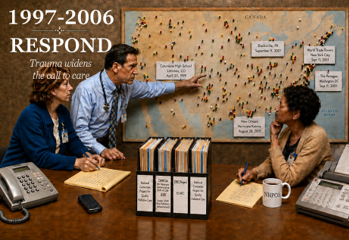
1997-2006

  • Trauma, Responsibility, and the Pursuit of Human Dignity
  • Hospice Grows Up
  • From Hospice to Hospital Halls: Palliative Care Finds Its Name
  • From Experience to Evidence and Education

2007–2026: Trauma, Equity, and Moral Distress

2007-2016

  • A Decade We Remember: 2007-2016 in American Life
  • From Movement to System: Hospice and Palliative Care Become a Measured Presence
  • Care Under Pressure: Different Hospice Models, Different Patterns of Care
  • Rewriting the Rules of Access: The Affordable Care Act, Aging, and Serious Illness
  • Healing in an Age of Trauma: Repeated Violence, Black Lives, and the Work of Care

2017-2026

  • COVID-19: Distance, Disparity, and the Demand for Presence
  • “I Can’t Breathe”: Racism, Suffering, and the Work of Care
  • Workforce, Moral Distress, and Business Models: Who Stays, Who Leaves, and Who Decides?
  • #MeToo and Hidden Caregivers
  • Emergency Disasters: Climate Change and Community Violence
  • Technology, Data, and the Meaning of Presence: Moving Faster Than Meaning

EPILOGUE

KEY SOURCES

Explore More

Home  | A History of Care |  About  |  Caregiver/Family Video Libraries  | Community Crisis and Grief  |   Serious Illness  |  Hospice Care  |  Grief Care  | Teaching   |  Book  |  Pay Invoice  |  Contact Us

Search

© 2017-2026. Composing Life Out of Loss. All rights reserved. Louisville, KY USA
  • Home
  • A History of Care
    ▼
    • Download Free E-Book
    • Prelude
    • Table of Contents: A History of Care
    • 1776-1866: Founding & Fracture
    • 1867-1936: Industrial U.S. & Reform
    • 1937-1976: War, Rights, & Hospice Origins
    • 1977-2006: Hospice & Palliative Care Take Shape
    • 2007-2026: Trauma, Equity, & Moral Distress
    • 2007-2026: Trauma, Equity, and Moral Distress
    • Coda – Composing the Next Movement of Care
    • Key Sources
  • About
    ▼
    • About
    • Book: Music of the Soul – Composing Life Out of Loss
  • Caregiver/Family Videos
  • Community Crisis
  • Serious Illness
  • Hospice
  • Grief
  • Contact
    ▼
    • Pay Invoice