
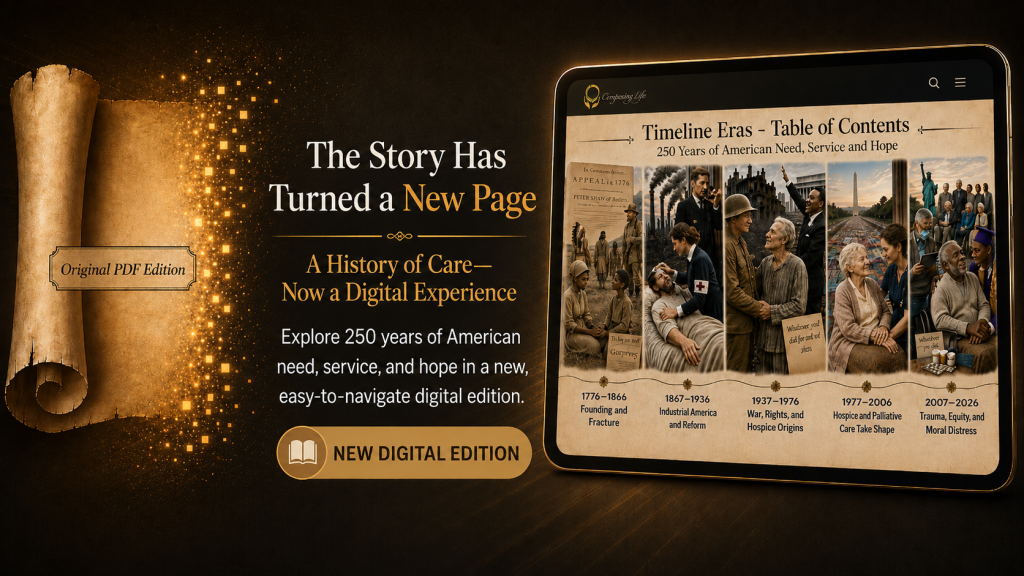
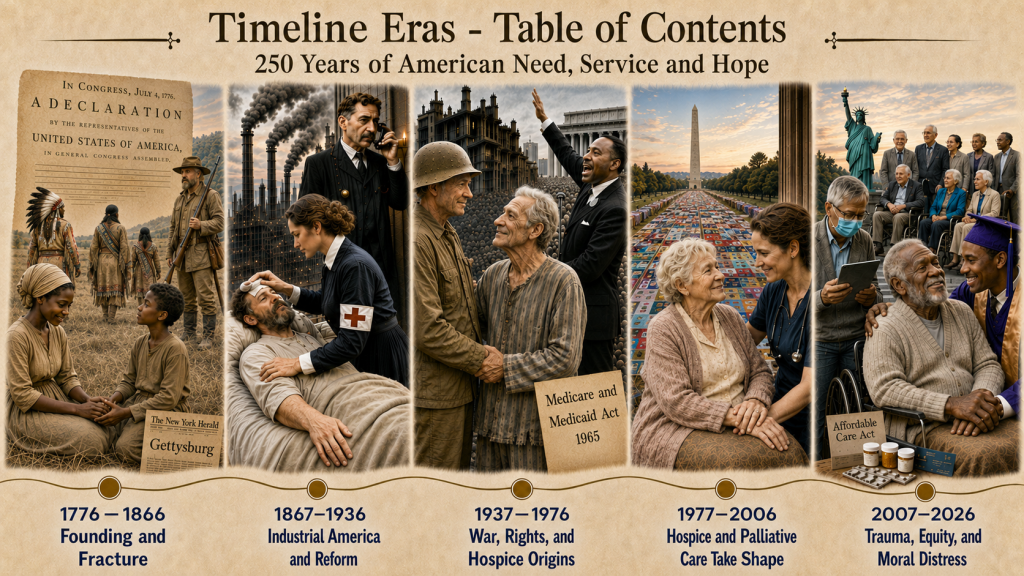
Scroll down or click on these links
PRELUDE
Partnering with Hospice & Palliative Care Today, Composing Life Out of Loss honored our 250th anniversary of the United States by celebrating a different kind of story: the long, uneven history of how Americans have responded to suffering. We invite you to explore how across war, epidemic disease, poverty, injustice, disability, serious illness, dying, and grief, the story of our country is also a story of service—of people who nursed, advocated, reformed, comforted, and widened the circle of care.
This series of 25 decades traces a history marked by struggle and courage, by failures that demanded truth-telling and by acts of compassion that opened new possibilities for healing—not a straight-line tale of progress, nor a simple chronicle of harm. Reflect with us on how the past shapes the hospice and palliative care we provide today—and the chapters we are called to write next. ~ Text and graphics authored by Joy S. Berger, Founder & CEO of Composing Life; Editor in Chief for Hospice & Palliative Care Today
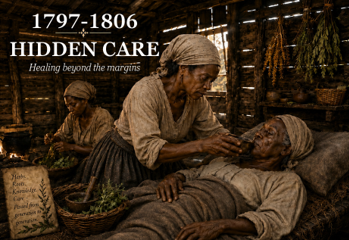
1797-1806
- United States Congress, Act for the Relief of Sick and Disabled Seamen, July 16, 1798
- Enslaved Healers and Midwives — Care in the Cabins, Early 1800’s
- Home Deaths at the Turn of the 19th Century (Late 1700’s-Mid 1800’s)
- Home Parlors and Funerals at the Turn of the 19th Century (Late 1700’s-Mid 1800’s)

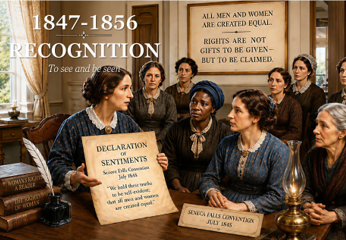
1847-1856
- Lemuel Shattuck, Report of the Sanitary Commission of Massachusetts, 1850
- Elizabeth Stanton and delegates of the Seneca Falls Convention, Declaration of Sentiments, 1848
- Sojourner Truth, Ohio Women’s Rights Convention, Akron, 1851 (as recorded by Frances Gage, 1863)
- Frederick Douglass, “What to the Slave is the Fourth of July?” Rochester, New York, July 5, 1852
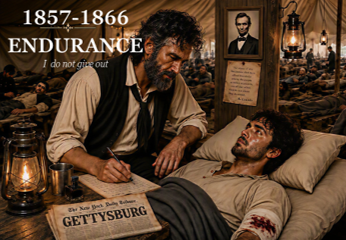
1857-1866
- Dr. Oliver Wendell Holmes, Sr., Annual Meeting of the Massachusetts Medical Society, 1860
- Walt Whitman, “The Wound-Dresser,” written from his wartime nursing experience 1862-1865
- President Abraham Lincoln, Gettysburg Address, November 19, 1863
- President Abraham Lincoln, Second Inaugural Address, March 4, 1865
- United States Congress, Act Establishing the National Asylum for Disabled Volunteer Soldiers

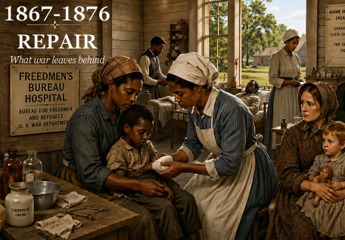
1867-1876
- U.S. Congress, Freedmen’s Bureau and the Medical Care of the Formerly Enslaved, 1865–1872
- Embalming and the Rise of the Funeral Profession after the Civil War, c. 1860s-1870s
- U.S. Marine Hospital Service, Reorganization and Supervising Surgeon, 1870–1873
- Poverty and Disease in the Postwar South, 1865–1876
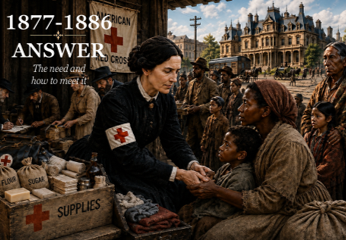
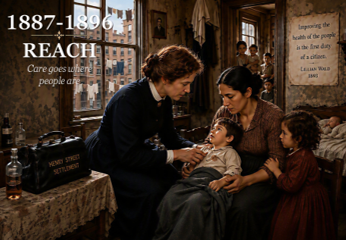
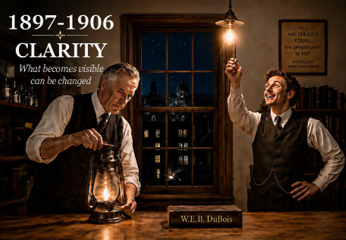
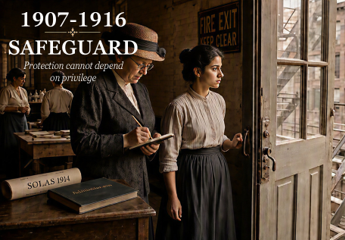
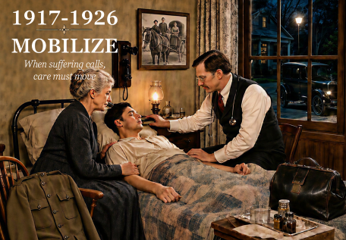
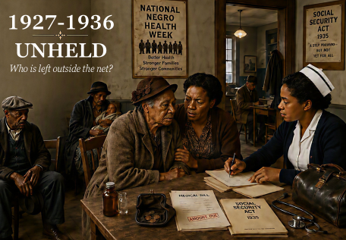
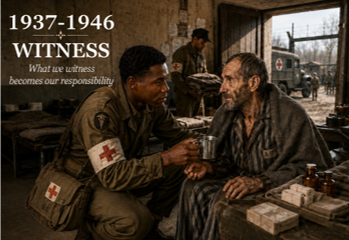
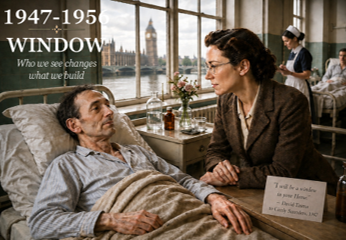
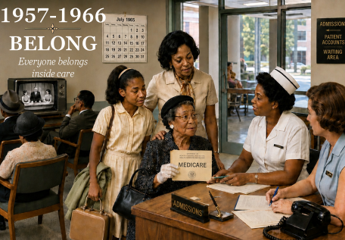
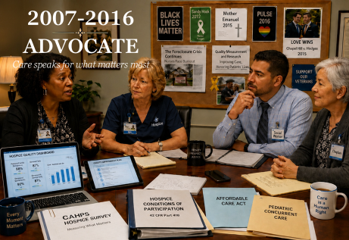
2007-2016
- A Decade We Remember: 2007-2016 in American Life
- From Movement to System: Hospice and Palliative Care Become a Measured Presence
- Care Under Pressure: Different Hospice Models, Different Patterns of Care
- Rewriting the Rules of Access: The Affordable Care Act, Aging, and Serious Illness
- Healing in an Age of Trauma: Repeated Violence, Black Lives, and the Work of Care

2017-2026
- COVID-19: Distance, Disparity, and the Demand for Presence
- “I Can’t Breathe”: Racism, Suffering, and the Work of Care
- Workforce, Moral Distress, and Business Models: Who Stays, Who Leaves, and Who Decides?
- #MeToo and Hidden Caregivers
- Emergency Disasters: Climate Change and Community Violence
- Technology, Data, and the Meaning of Presence: Moving Faster Than Meaning
Scroll down or click on these links